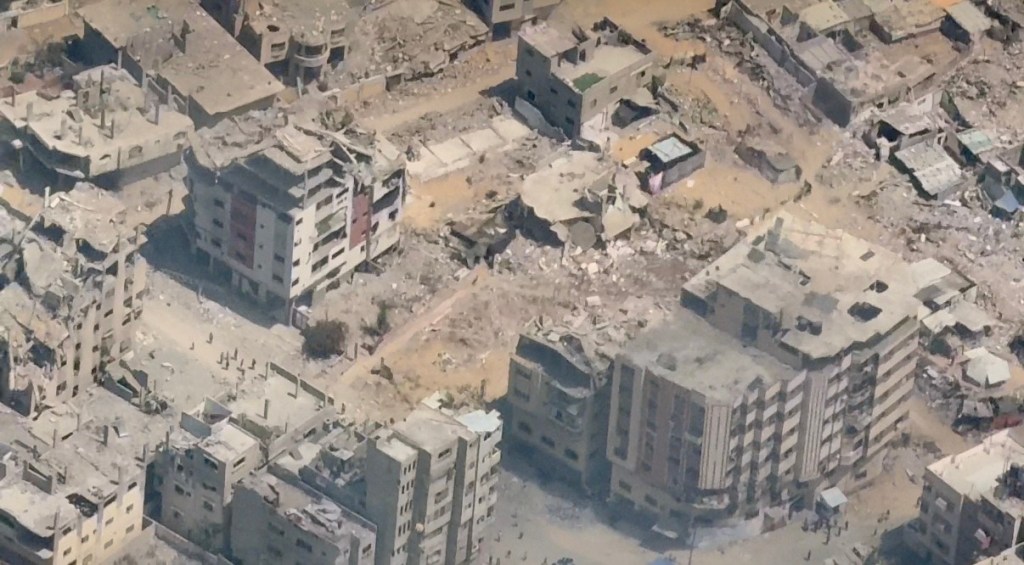
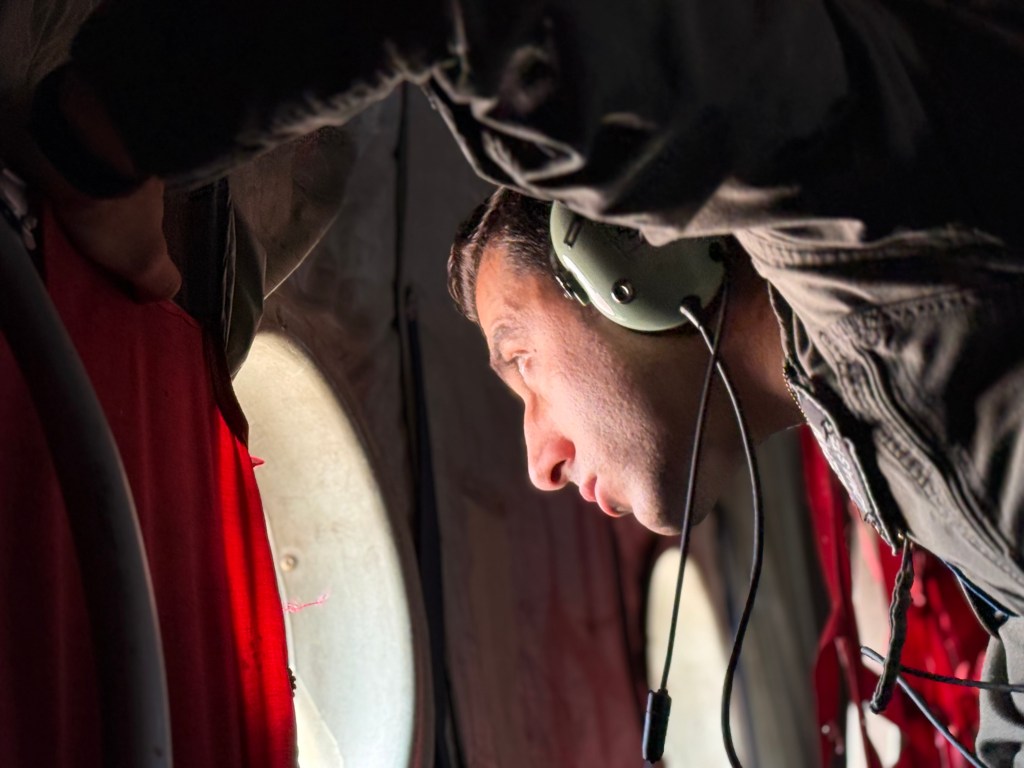
From the window of a Jordanian military aircraft, the devastation below is unmistakable. Neighborhoods lie in ruins. Schools, clinics, and farmland bear the scars of months of bombardment. In this fractured landscape, the challenge of getting aid to those who need it is immense.
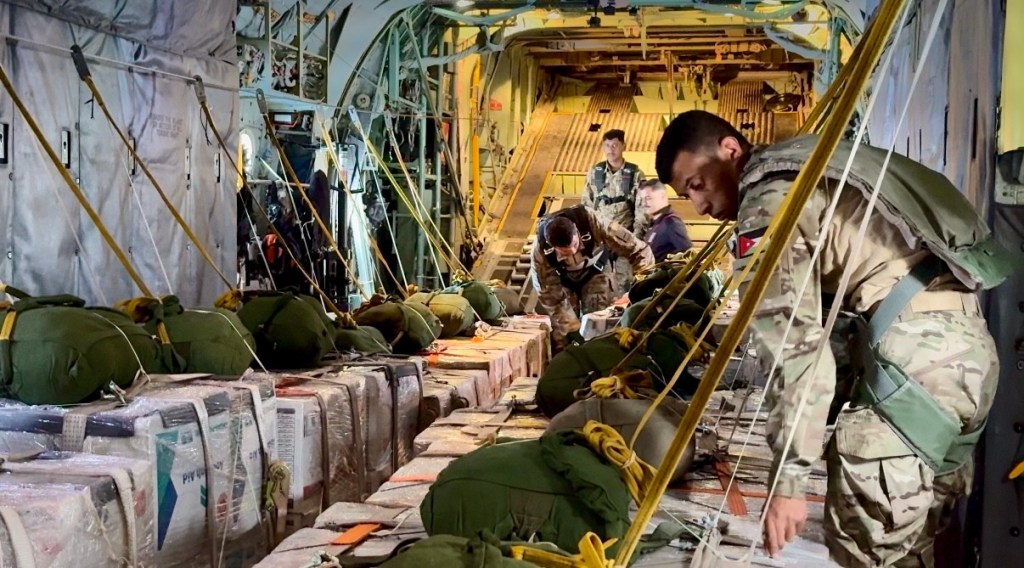
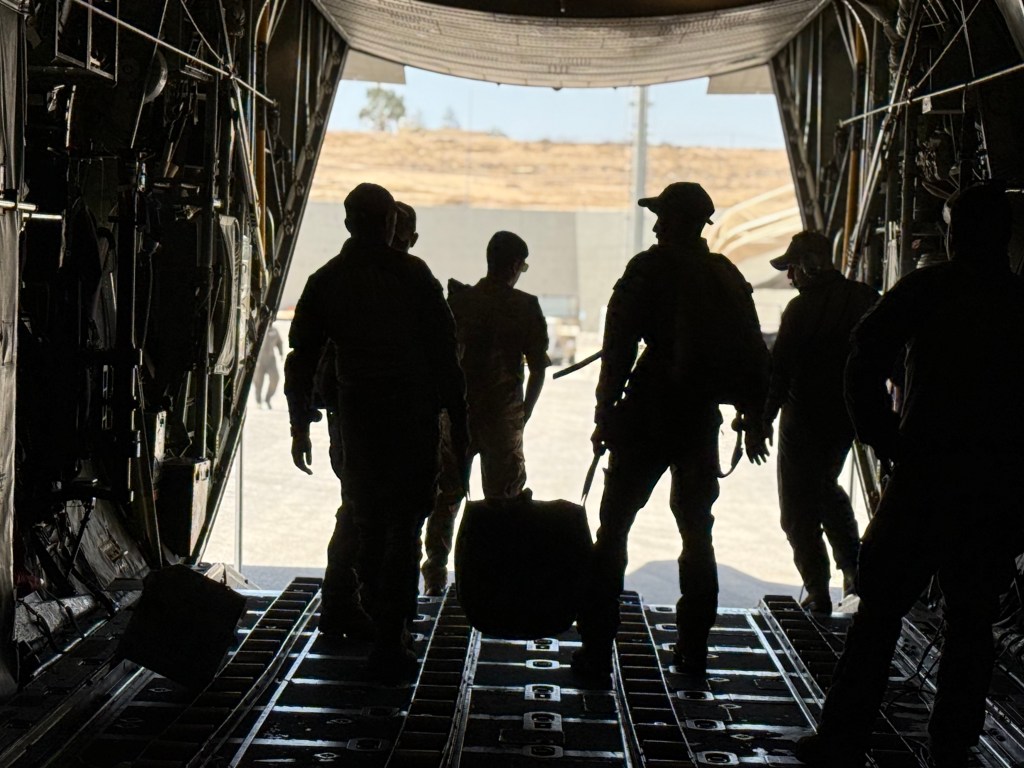
Since July 27, airdrops to Gaza have resumed: one of the few remaining channels for humanitarian supplies after Israel broke the ceasefire with Hamas in March. On the plane, crews work quickly, loading pallets of food, medical kits, and baby formula. Each bundle is measured to sustain a family of five for just three days. Road crossings remain heavily restricted. Truck convoys, once the backbone of aid delivery, have dwindled to a trickle. The United Nations estimates Gaza needs 500 truckloads of assistance daily to meet basic needs. Current deliveries barely scratch the surface.
In the two weeks since airdrops restarted, Jordan and its partners have completed 142 missions, releasing 379 tonnes of aid from altitudes of around 2,500 feet. Crews carefully select release points to minimize damage, parachutes billowing open to slow the descent as packages drift toward open fields or dense urban streets.
But the method is no substitute for sustained, large-scale aid. Supplies often land in unpredictable places, sparking desperate scrambles. Aid groups warn of the risks: crowd surges, competition, and in some cases, deadly stampedes. Since last October, at least 23 people have died and 124 have been injured in incidents linked to airdrops.
And the crisis goes deeper. Local authorities say that since October 2023, 188 people – nearly half of them children – have died from hunger. Israel rejects claims of starvation, blaming shortages on internal distribution failures.
From above, the urgency is visible in every shattered street and empty field. From the ground, it is felt in every hand reaching skyward as parachutes drift down. The airdrops, dramatic and symbolic, are an emergency measure in a place where emergency has become the norm.
For now, the missions continue, their arc across the sky a fleeting promise of relief. But until roads reopen and large-scale deliveries resume, Gaza’s hunger crisis will not be solved from the air.


 Francesca Maria Lorenzini
Leave a comment